
Carolina Logger
Third Quarter 2026
Honoring Our Heritage. Building Our Future
Official publication for the Carolina Loggers Association
In This Issue
Association News
- Executive Chairman's Corner
- Director Discussion
Industry & Business
- Were You Prepared for the Fuel Price Spike?
- FMCSA SMS: Consequences for Drivers & Carriers
- Key Transportation Risks for 2026
- Keep Your Logging Business Steady When Conditions Change
Stewardship & Heritage
- Rooted in Freedom
- Stewardship Is Our Legacy
The Future
- The Future of Logging Is Built One Generation at a Time
Safety
- Dog Days of Summer
Executive Chairman's Corner

Building on a Strong Foundation
By Stacy Reel, Chairman, Carolina Loggers Association
As we move through another busy summer season, many of us continue to keep a close eye on the cost of doing business. Fuel remains one of the largest expenses for logging and trucking operations. While prices have shown signs of easing in recent weeks, we all know that every penny matters when you’re hauling timber and working to keep your business profitable. We remain hopeful that this trend continues and provides some relief to our members.
While we can’t control fuel prices, we can control something even more important: our commitment to safety.
The dog days of summer bring long hours, high temperatures, and fatigue. Whether you’re in the woods, behind the wheel, at the landing, or in the shop, take an extra moment to watch out for yourself and those working beside you. A simple reminder, a helping hand, or taking a few extra seconds to do the job safely can make all the difference. Our industry’s greatest resource isn’t our equipment; it’s our people.
One of the greatest strengths of the Carolina Loggers Association is the relationships we’ve built throughout our region. Our partnerships with neighboring forestry and logging associations, industry organizations, and allied businesses strengthen us all. By working together, sharing ideas, and speaking with a united voice, we ensure that our industry remains strong and well represented for years to come.
Thank you for your continued support of the Carolina Loggers Association. Together, we’re building a safer, stronger, and more connected logging community. I encourage you to stay engaged, support your fellow members, and continue sharing the value of our association with others in the industry.
Have a safe and productive summer. We look forward to seeing you down the road.

Autumn Sunset at Flat Rock on the Blue Ridge Parkway - North Carolina
Sponsored by
Sponsored by


The Strength of Our Association
By Jonzi Guill, Executive Director, Carolina Loggers Association
As we move into the third quarter of the year, there are encouraging signs across our industry. Fuel prices have eased from the highs we’ve experienced over the past year, providing some welcome relief for logging businesses that continue to manage rising costs in nearly every other area of operation. While we all know markets can change quickly, any savings at the fuel pump are good news for our members.
In Raleigh, the North Carolina General Assembly continues working through budget negotiations and transportation funding priorities as the legislative session moves toward adjournment. The Carolina Loggers Association remains engaged, monitoring legislation and regulatory issues that could impact our industry. We’ll continue to keep you informed and represent the interests of North Carolina’s professional loggers as these discussions move forward.
Our association exists because of the support of people who believe in the future of forestry and logging. I want to extend a sincere thank you to our corporate sponsors, advertisers, and contributors who invest their time and resources to help make our programs, educational efforts, and advocacy possible. Your partnership strengthens our industry and helps us better serve our members throughout the year.
Membership is the foundation of a strong association. If you know a logger, truck owner, forester, supplier, or industry professional who isn’t yet a member of the Carolina Loggers Association, I encourage you to invite them to join. Every new member adds another voice for our industry and strengthens our ability to advocate for the businesses and families who depend on forestry in North Carolina.
Thank you for your continued support of the Carolina Loggers Association. We appreciate the opportunity to serve you and look forward to seeing many of you at our upcoming events. Until then, stay safe, work smart, and thank you for all you do to keep our forests working for future generations.
Jonzi Guill,
Executive Director
Carolina Loggers Association
Sponsored by

By Joe Conrad
Being ready for a spike in fuel prices does not mean that you do not feel the pain when it arrives. Preparing for fuel price increases is similar to preparing for hurricanes in that the most prepared person can still suffer tragic losses. Just because you may have lost money because of the spike in fuel prices does not necessarily mean that you were unprepared, and it certainly does not mean that you are a bad businessman.
1. Understand Your Company’s Fuel Use
It is impossible to understand the impact of rising fuel prices on a company without knowing its fuel consumption. Keeping and analyzing records of fuel purchases and associated production levels is critical. For example, if Clarke Logging purchased 3,000 gallons of off-road diesel fuel in January for $9,300 and produced 5,000 tons of timber, then its fuel consumption rate was 0.6 gallons per ton (3,000 gallons / 5,000 tons) and the average fuel cost was $1.86/ton ($9,300/5,000 tons). With this information, the owner can estimate the impact of rising fuel prices on harvesting costs. If the fuel consumption rate is 0.6 gal/ton, if fuel prices rise by $0.50/gal, then harvesting costs will increase by $0.30/ton (0.6 gal/ton x $0.50/gal) and if fuel prices rise by $1/gal, then harvesting costs would increase by $0.60/ton (0.6 gal/ton x $1/gal).
The above is very simple and should not take very much time to complete. However, these estimates are imprecise. For example, if the company’s storage tanks were full at the beginning of the month and empty at the end of the month, then fuel consumption would have been underestimated. The above does not account for tract-to-tract variability in fuel consumption. These estimates could be improved by tracking fuel consumption and production over the long term rather than looking at only one month.
Collecting more detailed data would be helpful to better understand fuel consumption and adjust to price increases. Collecting fuel consumption data on individual machines is ideal. Data can be collected on late model equipment via telematics and may be available via app or website. Another approach would be to require operators to record the number of gallons added to their machine at each fill up, along with the date, hour meter reading, etc. This information could be used to identify fuel saving opportunities and evaluate how fuel consumption varies from tract to tract.
Oconee Logging has collected detailed information (Table 1). With this additional information, they can evaluate specific functions of their operation and identify opportunities to reduce fuel costs. Tracking this data over time can be especially valuable to detect fuel lost to leaks, equipment malfunctions, or theft.
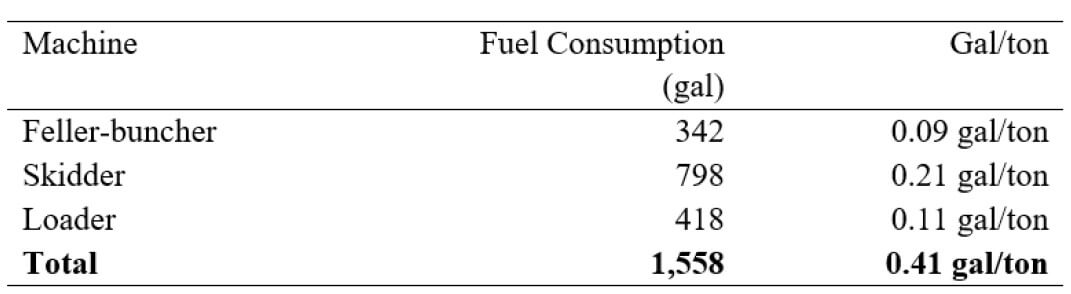
Table 1: Oconee Logging fuel consumption by in-woods equipment during one month while harvesting 3,800 tons of timber.
2. Negotiate Fuel Cost Adjustments
The best time to negotiate fuel cost adjustments is before prices rise. Some companies have contracts that adjust automatically based on published fuel prices. The U.S. Energy Information Administration publishes weekly average diesel fuel prices, for example (Figure 1). These arrangements greatly reduce the risk faced by loggers. However, fuel prices go up and down. The contract reduces the logging rate when fuel prices fall.
Fuel cost adjustments, whether negotiated before prices rise or decided upon in response to price increases, should be based on data. A logging business that can clearly communicate the impact of fuel price increases with specific numbers will generally be more effective than those who simply pound the table about the pain inflicted by rising fuel prices. A logger that tells a procurement manager that a fuel price increase has raised costs by $0.50 per ton, and explains how that value was determined, has a much greater chance of negotiating a satisfactory agreement than someone who does not know this information. Of course, some purchasers are more amenable to these agreements than others.
3. Increase Cash Reserves
Fuel price increases expose a business to higher expenses in the short term and may result in losses if fuel cost adjustments are insufficient, delayed, or fail to materialize. Having sufficient cash available to weather short-term price increases can stave off insolvency and allow time to develop a strategy.
4. Reduce Fuel Usage
Obviously, there is a limit to this strategy. Diesel fuel is the lifeblood of a logging operation. However, improving fuel efficiency can meaningfully reduce costs.
Below are practical ideas shared by experienced logging professionals to help reduce fuel consumption:
- Reduce equipment idling. Idling wastes fuel. Modern emissions systems were not designed for extended idling, and modern engines no longer require lengthy warm-up periods. Excessive idling also consumes valuable warranty hours.
- Reduce skidding distance. Good harvest planning can shorten skidding distances, improving productivity while reducing fuel consumption.
- Maintain equipment. Fuel leaks, faulty injectors, and other mechanical issues waste fuel and reduce machine performance. Regular maintenance and timely repairs improve efficiency and extend equipment life.
- Match equipment to site conditions. Operating machines within their intended design specifications improves efficiency and reduces fuel use per ton. For example, a large feller-buncher may be underutilized on a first thinning, while larger skidders can often reduce fuel consumption per ton.
- Maximize truck payload. Trucks loaded to the maximum legal limit consume less fuel per ton than underloaded trucks.
- Increase percent-loaded miles. Fewer than half of all log truck miles are loaded. Whenever backhaul opportunities exist, they reduce fuel consumption per ton of wood delivered.
- Coach drivers. Improved driving habits can increase fuel efficiency by an estimated 5–15%. Even improving fuel economy by 0.5–1 mpg can produce meaningful savings over time.
Conclusion
Fuel price increases are an unavoidable reality for logging business owners (Figure 1). Preparing for them should be part of every business plan, just as preparations are made for severe weather or other unexpected events. Preparation cannot eliminate every challenge, but it can reduce the financial impact and improve a company's ability to respond effectively.
Useful Formulas

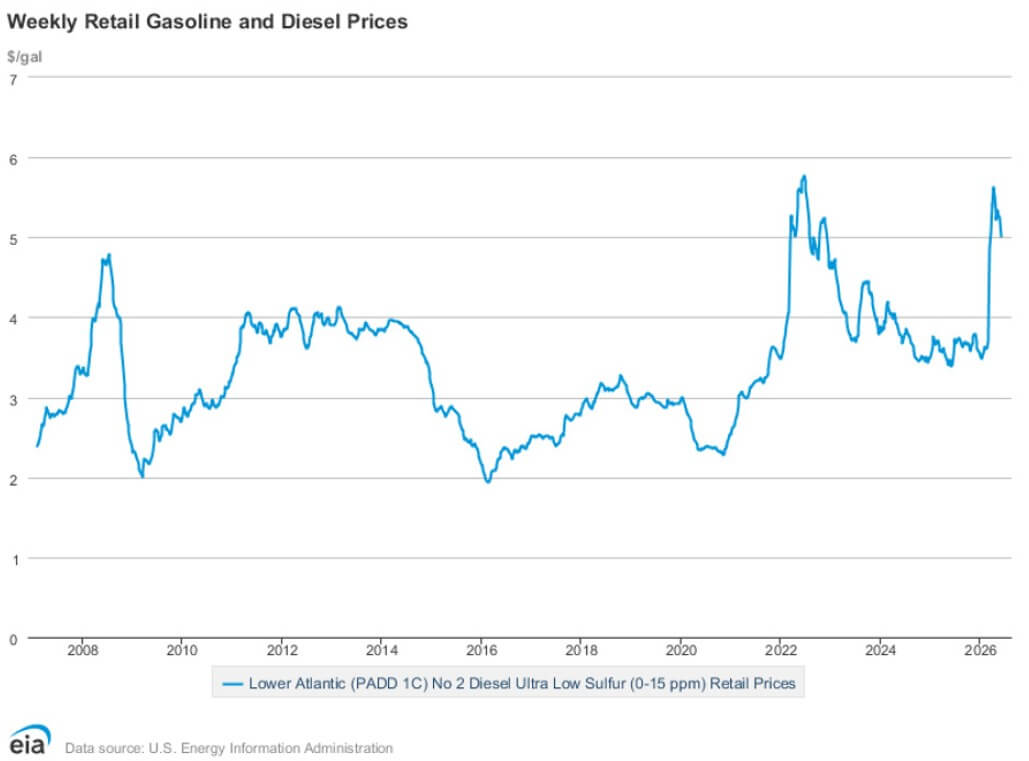
Figure 1: Weekly on-highway diesel prices in the Lower Atlantic region (includes NC and neighboring states) from 1994–2026.
Reference
Energy Information Administration. 2026. Weekly retail gasoline and diesel prices. Accessed June 4, 2026. https://www.eia.gov/dnav/pet/pet_pri_gnd_dcus_r1z_w.htm.
Sponsored by
Sponsored by


FMCSA SMS:
Consequences for Drivers & Carriers
By Jimmie Locklear
Truck Safety Resources
TimberRisk Agency
I’ve been behind the wheel, owned and operated trucks, and worked through the day-to-day realities of keeping a fleet safe and compliant. Over time, I’ve learned that “safety” isn’t just what’s written in a policy—it shows up in the numbers. The FMCSA Safety Measurement System (SMS) is one of the clearest places where that performance becomes visible, because SMS violations don’t just stay internal; they follow drivers and carriers into inspections, insurance underwriting conversations, and crash investigations.
If you are involved in a crash, FMCSA SMS can be a powerful defense or litigation tool because it helps organize evidence about prior safety performance, compliance signals, and safety management practices. For defense and litigation strategy, SMS can be a key to courtroom outcomes.
In this article, you’ll see how FMCSA Safety Measurement System (SMS) violations impact both truck drivers and truck owners (carriers) by influencing safety ratings, regulatory scrutiny, and operational costs. These violations are recorded in the FMCSA’s SMS database, which is publicly accessible and used by enforcement agencies, insurers, and others to assess safety performance.
Impact on Truck Drivers
Safety Rating and Compliance
Drivers involved in SMS violations may face increased inspections and scrutiny during roadside checks. Repeated violations can lead to being placed out of service, suspension, or loss of a commercial driver's license (CDL).
Employment Consequences
Drivers with poor SMS records may find it harder to secure jobs or retain employment, as carriers prefer drivers with clean safety histories.
Insurance and Liability
Drivers may be personally liable for violations related to their actions, which can affect insurance premiums or claims.
Impact on Truck Owners (Carriers)
Safety Score and Rating
SMS violations contribute to a carrier's safety score, which affects its overall safety rating (Satisfactory, Conditional, or Unsatisfactory). Poor ratings can trigger audits, investigations, or operational restrictions.
Operational Costs
Higher violation rates can lead to increased insurance premiums, loss of contracts, and reduced business opportunities due to reputational damage.
Regulatory Actions
Carriers with significant SMS violations may face fines, out-of-service orders, or even revocation of operating authority.
Driver Management
Owners must actively manage driver behavior and vehicle maintenance to avoid violations, often requiring investment in training and compliance programs.
Clear communication between the truck owner and truck driver is the foundation for strong FMCSA compliance and safer operations. The truck owner should ensure the fleet performs regularly scheduled service according to the manufacturer's guidelines, while the driver supports this process by completing thorough pre-trip inspections and promptly reporting equipment issues so repairs can be made before they become costly breakdowns.
To keep the operation compliant and efficient, both the owner and driver should maintain accurate records of inspections, maintenance, and corrective actions. Drivers should also keep all required documentation readily available for roadside inspections.
In summary, FMCSA SMS violations can create significant consequences for both truck drivers and truck owners by affecting safety ratings, regulatory compliance, and business viability. Both parties must actively monitor and manage safety performance using FMCSA resources to reduce these risks.
If you have questions regarding the FMCSA Safety Measurement System or would like assistance with compliance or driver safety concerns, contact TimberRisk Agency's Truck Safety Resources at jimmie@timberrisk.com.
Your trucking success is important to us!
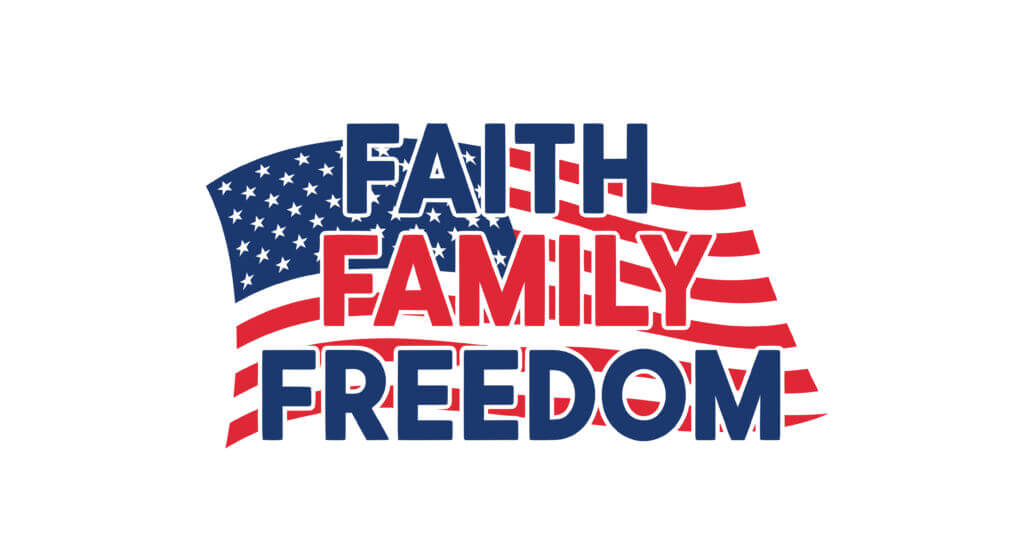
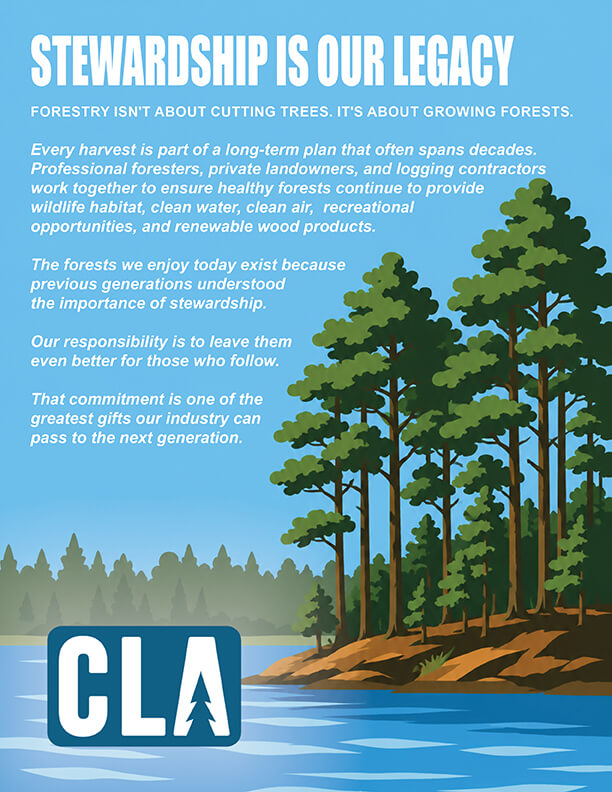
The American forestry community has always been rooted in values that stand the test of time.
Faith teaches us to be good stewards of God's creation.
Family reminds us why we work long days and make difficult sacrifices.
Freedom gives us the opportunity to own land, build businesses, and earn an honest living through hard work.
These values have shaped generations of logging families across the Carolinas. While equipment has changed dramatically over the past 250 years, the character of the people working in our forests remains remarkably the same.

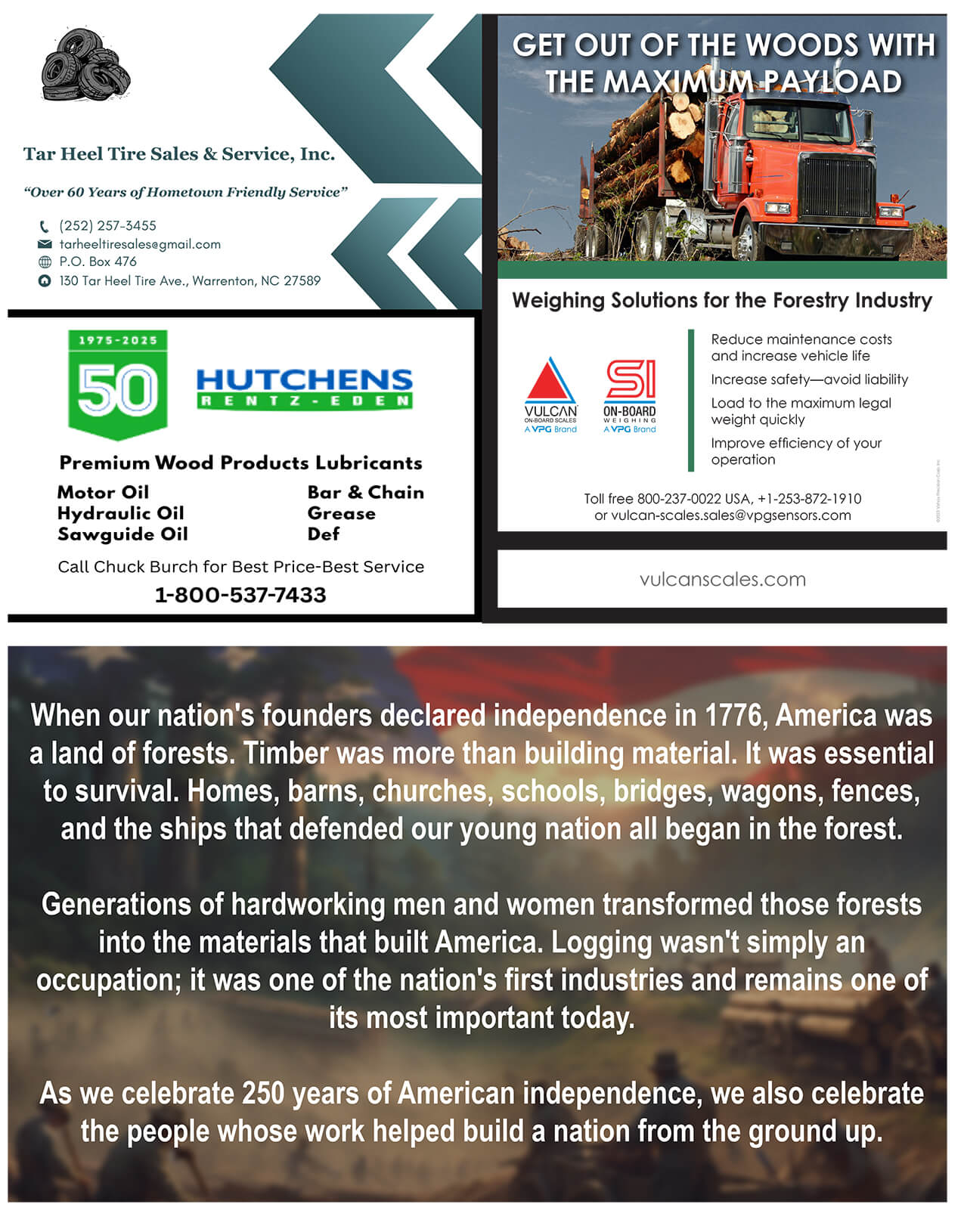
When America celebrates its 250th birthday in 2026, we'll commemorate more than the signing of the Declaration of Independence. We'll celebrate the people who built a nation from forests.
Long before there were highways and skylines, there were timber crews. The first homes, barns, churches, schools, bridges, ships, and businesses were built from American wood. From the Appalachian Mountains to the Carolina coastal plain, our forests provided the materials that helped turn thirteen colonies into the United States.
Logging has never simply been about harvesting trees. It has always been about providing for families, supporting communities, and responsibly using one of God's greatest renewable resources.
Today, modern forestry looks very different than it did 250 years ago. Professional foresters, private landowners, and logging contractors work together to ensure forests remain healthy and productive for generations to come. In North Carolina, more timber is grown than is harvested each year, making forestry one of America's greatest examples of renewable resource management.
Our forests do far more than produce lumber and paper. They clean our air, filter our water, provide wildlife habitat, capture carbon, and create places where families hunt, fish, hike, and make lifelong memories. None of that happens by accident. It happens because generations of landowners and forestry professionals have chosen stewardship over short-term gain.
The American logger has always been more than someone who cuts trees. They are a skilled equipment operator, business owner, conservation partner, safety professional, and steward of the land. Every load hauled from the woods represents another forest that has been carefully managed with the future in mind.
As we celebrate America's birthday, we can take pride in knowing our industry helped build this nation and continues to strengthen it today. We honor those who came before us, remain humble in our responsibility to care for God's creation, and recognize that the freedoms we enjoy also carry the responsibility to leave something better for the next generation.
The Carolina Loggers Association is proud to represent the men and women who continue that tradition every day. Their work sustains families, rural communities, and one of America's most important renewable industries.
Sponsored by
Sponsored by

Sponsored by
Sponsored by

Transportation Industry Under Pressure: Key Liability Risks Moving Forward in 2026
The transportation sector, particularly trucking, continues to face heightened scrutiny and escalating risks in 2026. Rising claim severity, evolving federal regulations, the push toward autonomous technologies, and persistent workforce challenges are creating a complex liability landscape for carriers operating in Virginia, Maryland, DC, and beyond. For companies in this space, proactive risk management is no longer optional—it’s essential to protecting operations, drivers, and the bottom line.
Surging Traumatic Injury Claims and Nuclear Verdicts
Commercial trucking incidents often result in severe, life-altering injuries or fatalities, driving up both frequency and severity of claims. Medical costs have climbed sharply, repair expenses for modern equipment have skyrocketed, and juries continue to deliver large “nuclear” verdicts (awards exceeding $10 million) in catastrophic cases.
Factors contributing to this trend include:
- Distracted driving amplified by in-cab technology and electronic logging devices.
- Driver fatigue despite Hours of Service (HOS) rules.
- Cumulative trauma claims from repetitive tasks, which are rising across transportation.
In trucking, even routine accidents can generate outsized settlements due to high medical bills and loss-of-earnings claims. Carriers with inadequate insurance limits or weak safety records are especially vulnerable, as plaintiffs increasingly target deeper pockets through negligent selection, retention, or entrustment theories.
Practical takeaway:
Regularly audit driver qualification files, implement robust fatigue management programs, and ensure insurance coverage reflects current verdict trends. Defense strategies that emphasize compliance documentation and early investigation can significantly mitigate exposure.
FMCSA Regulatory Updates and Compliance Risks
The Federal Motor Carrier Safety Administration (FMCSA) rolled out several impactful changes in early 2026 that directly affect liability exposure:
Non-domiciled CDL restrictions — Effective March 2026, a final rule limits eligibility for nondomiciled Commercial Learner’s Permits and CDLs primarily to holders of specific employment-based nonimmigrant visas (such as H-2A, H-2B, or E-2). This crackdown, paired with Operation SafeDRIVE enforcement actions, aims to remove unqualified drivers but creates hiring and verification burdens for carriers. Failure to properly vet drivers can lead to negligent hiring claims or FMCSA safety rating downgrades.
Drug and Alcohol Clearinghouse enhancements and testing expansions — Proposals to add fentanyl to testing panels (expected early 2026) and ongoing Clearinghouse updates increase compliance obligations. Positive tests or incomplete records can trigger disqualification risks and litigation if an impaired driver causes an accident.
ELD, HOS, CSA, and electronic DVIR clarifications — Stricter enforcement around electronic logging devices, hours-of-service flexibility pilots, and the Safety Measurement System (SMS) overhaul mean that poor inspection scores can quickly escalate to out-of-service orders or higher insurance premiums.
National Registry II (NRII) rollout — For medical certifications, requiring real-time electronic reporting.
Non-compliance doesn’t just invite fines—it can serve as powerful evidence in civil lawsuits, shifting the burden in personal injury cases and complicating defenses.
Action step:
Conduct quarterly compliance audits, train dispatch and HR teams on the new CDL and drug-testing rules, and maintain meticulous records that demonstrate good-faith efforts to meet federal standards.
Autonomous and Advanced Driver Assistance Systems (ADAS): Shifting Liability
Autonomous trucking is moving from testing to limited commercial operations on hub-to-hub corridors. As Level 3+ and higher systems become more common, liability is evolving from traditional driver negligence to complex product liability, software defects, sensor failures, and cybersecurity issues.
Key emerging risks include:
- Manufacturers and software providers facing design-defect or failure-to-warn claims when autonomous systems malfunction.
- Fleets potentially sharing liability for inadequate oversight, training on intervention protocols, or maintenance of ADAS components.
- “Nuclear” verdicts against tech suppliers in rollover or collision cases, with examples already reaching $160 million in related litigation.
Even semi-autonomous features raise questions: Who is at fault when a system fails to detect a hazard—the driver, the fleet, or the OEM? Multi-party litigation is becoming the norm, involving discovery of black-box data, algorithms, and remote monitoring logs.
Recommendation:
Update contracts with technology vendors to clearly allocate risk, implement rigorous ADAS maintenance and driver training protocols, and review insurance policies for gaps in product liability and cyber coverage. Early involvement of counsel in any incident involving autonomous tech is critical.
Employment and Driver-Related Liability Issues
The ongoing driver shortage exacerbates risks. Carriers may face pressure to hire quickly, potentially overlooking red flags in background checks or qualification files. English Language Proficiency (ELP) enforcement, CDL training provider scrutiny, and union-related developments for certain drivers add layers of complexity.
In Virginia, Maryland, and DC, state-specific employment rules (including minimum wage adjustments and rideshare reporting requirements) intersect with federal transportation regulations, creating potential wage-and-hour or misclassification exposure for fleets using owner-operators or third-party drivers.
Best practice:
Strengthen onboarding and retention programs, document all safety training, and consult employment counsel on compliance with both DOT/FMCSA and state labor laws to reduce wrongful termination, discrimination, or negligent supervision claims.
Protecting Your Operations in a High-Risk Environment
Transportation companies cannot afford to treat these pressures as background noise. Rising insurance premiums, tighter underwriting scrutiny, and aggressive plaintiff strategies mean that robust safety cultures, meticulous documentation, and swift legal response plans are competitive advantages.
At Setliff Law, we regularly represent transportation companies in high-stakes litigation, regulatory matters, and risk mitigation across Virginia, Maryland, DC, and neighboring jurisdictions. Our experience in commercial transportation defense, employment issues, and complex liability cases equips us to help carriers navigate ongoing challenges—whether defending a catastrophic injury claim, responding to an FMCSA inquiry, or structuring agreements for emerging autonomous technologies.
If you have questions about this article, please contact Steve Setliff (ssetliff@setlifflaw.com) at (804) 377-1261.
Sponsored by

Sponsored by


Keep Your Logging Business Steady When Conditions Change
Logging is an inherently cyclical business. Markets rise and fall, costs shift, weather conditions impact production, and demand shifts in ways that are outside of your control.
What is in your control are the financial decisions you make along the way.
After years of working with logging operations, we've seen firsthand which decisions keep a business steady and which create pressure when conditions change.
These decisions, including how you invest in equipment, maintain equipment, manage costs, and handle personal spending, can determine whether your operation stays profitable or gets stretched when the cycle turns. This is where discipline is important, and it makes a big difference in business outcomes.
Factors Affecting Logging Operations in Today's Market
The markets for paper and wood products are shifting. Paper usage has declined as digital technologies have taken hold, and the furniture industry has shifted toward overseas manufacturing and composite materials. Reduced product demand, combined with the high costs of mill operation and maintenance, has caused a number of mills to shut down.
Another key pressure point comes from mill quotas and shifting demand, particularly from residential construction, which drives much of the market for lumber. As homebuilding activity slows, the demand for framing lumber is reduced. This pressure results in less demand for logs moving through the supply chain, which can leave crews and equipment underutilized.
With so many scenarios and conditions affecting production and profitability, having the right financing strategy in place becomes essential for maintaining stability and supporting long-term success.
Manage Service Pricing, Equipment Lifecycle, and Personal Spending
There are three key places where financial discipline is critical: service pricing, equipment lifecycle management, and personal spending.
Service Pricing
When demand for logging services declines, some logging and hauling companies tend to cut prices to win business. In the short term, this might feel like a successful way to keep your equipment operating and your trucks moving, but if the prices don't fully cover your operating expenses, you are losing money on every load.
With lower prices, the business has less flexibility to absorb increases in operational costs. Discipline in pricing can be difficult, but it's critical to long-term success.
Equipment Lifecycle Management
There are two important disciplines when managing your equipment fleet:
- Equipment maintenance
- Equipment acquisition timing
Maintenance
Regardless of when you buy equipment or whether you purchase new or used machines, maintenance matters. Well-maintained equipment lasts longer, stays productive, and retains its value longer.
Especially in down cycles, you might be tempted to reduce costs by reducing maintenance, but this usually leads to downtime, higher repair costs, and shorter equipment lifespans.
Equipment Acquisition
Resist the urge to overinvest in equipment. Be disciplined about acquisition. If possible, keep equipment after it's paid off and replace it gradually. This helps control costs and keeps payments manageable.
Buying or replacing multiple machines at the same time stacks payments and adds financial stress.
Good equipment maintenance and a staggered acquisition strategy allow you to build equipment equity over time. Equipment equity provides financial optionality should you need working capital or need to sell or trade equipment.
Personal Spending
It's not just business decisions that cause financial pressure; for small businesses, personal spending decisions can also create pressure.
During strong market periods, it's easy for personal spending to increase alongside revenue. What feels manageable during strong years can become a source of strain when the market tightens.
The key discipline here is to increase savings alongside spending to ensure you can weather the inevitable downturn in both your personal and business finances.
Financing Structure Shapes Your Equity Position
How equipment is financed doesn't just affect the payment; it affects how your equity position in that equipment changes over time.
Many equipment buyers focus on the interest rate or the monthly payment. Those are important, but they don't tell the full story. The structure of the transaction, including down payment, term, and how quickly the balance is repaid, has just as much impact on where the business stands over time.
Putting more money down and/or shortening the term works to pay down the balance faster and build equity earlier. That puts the business in a stronger position if something needs to change, whether that's selling a piece of underutilized equipment or accessing working capital.
With less money down and/or a longer term, it takes longer to build a strong equity position. The balance stays higher, and options can be limited.
Discipline Makes the Difference
At the end of the day, it comes back to discipline.
Service pricing, equipment acquisition and maintenance, personal spending, and financing structure all work together to give the operation room to adjust and more options when conditions change.
In a cyclical business, having that flexibility is what helps a logging operation stay steady, no matter the market conditions.
Stay lean, stay prepared, and don't let today's success create tomorrow's problems.

Brad Bullock is the Regional Vice President of the construction team in the Southeast. His career includes sales, construction, and finance. He started at Commercial Credit Group as a regional sales manager in 2016.
He’s spent many hours visiting logging and forestry customers amongst the trees.
By Jean-Paul Damé
I've spent enough time in this industry to know that logging has never just been a job. It's a way of life. Across the Carolinas, I've watched family businesses harvest timber, care for our forests, and help build the communities we all call home.
The logging industry looks a lot different today than it did 30 years ago. Modern harvesting equipment, GPS technology, advanced safety systems, and sustainable forestry practices have changed how we work. But one thing hasn't changed. This industry still depends on hardworking people who take pride in doing the job right.
As many of our experienced loggers begin thinking about retirement, I believe one of the greatest opportunities in front of us is investing in the next generation. Whether it's a son or daughter joining the family business, a young equipment operator learning the trade, or a truck driver starting a career in forestry, every new person who enters this profession strengthens the future of our industry.
I've always believed that one of logging's greatest strengths is mentorship. The most valuable lessons aren't found in a textbook. They're learned through long days in the woods, solving problems, working safely, and understanding the responsibility that comes with managing one of our nation's greatest renewable resources.
At the Carolina Loggers Association, that's exactly what we're committed to supporting. Through safety education, industry advocacy, professional relationships, and strong partnerships throughout the forestry community, we're working to give the next generation the tools, knowledge, and opportunities they need to succeed.
Our forests will continue to grow. Our industry will continue to evolve. My hope is that we'll continue to encourage young men and women to step into this profession, learn from those who came before them, and carry forward the traditions that have made logging such an important part of the Carolinas.
Together, we're not just harvesting timber. We're growing the future of our industry.
Sponsored by
Sponsored by


Logging Style:
Prom Night Arrivals
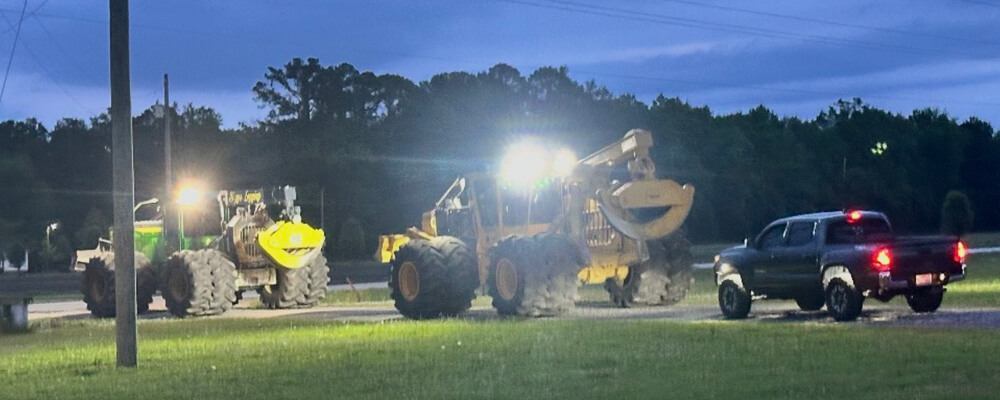
Forget the limousine. Colin Cahoon (Cahoon Logging, Belhaven) and Seth Biggs (Biggs Logging, Pinetown) made one of the most memorable prom entrances of the year by arriving in their family skidders. Now that's logging style.
Most high school students dream about arriving at prom in a shiny sports car or a stretched limousine.
Not this pair.
This year's award for the most unforgettable entrance has to go to Colin Cahoon of Cahoon Logging in Belhaven
and Seth Biggs of Biggs Logging in Pinetown. Instead of chrome and leather, they rolled in with thousands of
pounds of steel and horsepower, arriving in their family logging skidders.
Colin pulled up in a Tigercat skidder, while Seth made his entrance behind the wheel of a John Deere skidder. It's
not every day you see forestry equipment parked alongside tuxedos and corsages, but it certainly turned a few
heads.
We're used to seeing tractors steal the spotlight during prom season, but these young men gave the logging industry its own moment to shine.
The Carolina Loggers Association is proud to recognize Colin and Seth, along with their families at Cahoon Logging and Biggs Logging, for reminding everyone that logging isn't just a profession; it's a family tradition passed from one generation to the next.
Congratulations, gentlemen. We hope prom was as memorable as the ride there.

Summer is hard on equipment, but it's even harder on the people running it.
Long days, high humidity, and relentless heat can wear you down before you realize it. Fatigue, dehydration, and heat stress don't just affect how you feel. They affect your judgment, your reaction time, and your ability to work safely.
Drink water throughout the day, not just when you're thirsty. Take a few minutes in the shade when you can. Wear light clothing, protect yourself from the sun, and don't be afraid to speak up if the heat is getting to you.
Just as important, keep an eye on the folks working beside you.
Sometimes the first person to notice heat exhaustion isn't the one suffering from it. If your buddy starts acting confused, seems unusually tired, complains of dizziness, or stops sweating on a hot day, don't brush it off. Stop work, get them into the shade, cool them down, and seek medical attention if needed.
Logging has always been built on looking out for one another. The timber will still be there tomorrow. Make sure your crew is too.
This summer, don't just watch your own back. Watch your buddy's too.
A Safety Message from the Carolina Loggers Association in Partnership with FMIC Insurance Company
Sponsored by

Sponsored by
Thank You for Reading
Thank you for supporting the Carolina Loggers Association and the forest products industry.
Ready to stay connected?
Scroll down to become a member, sign up for email updates, register for upcoming events, or contact the CLA.