
September 28, 2026
Carolina Loggers Association
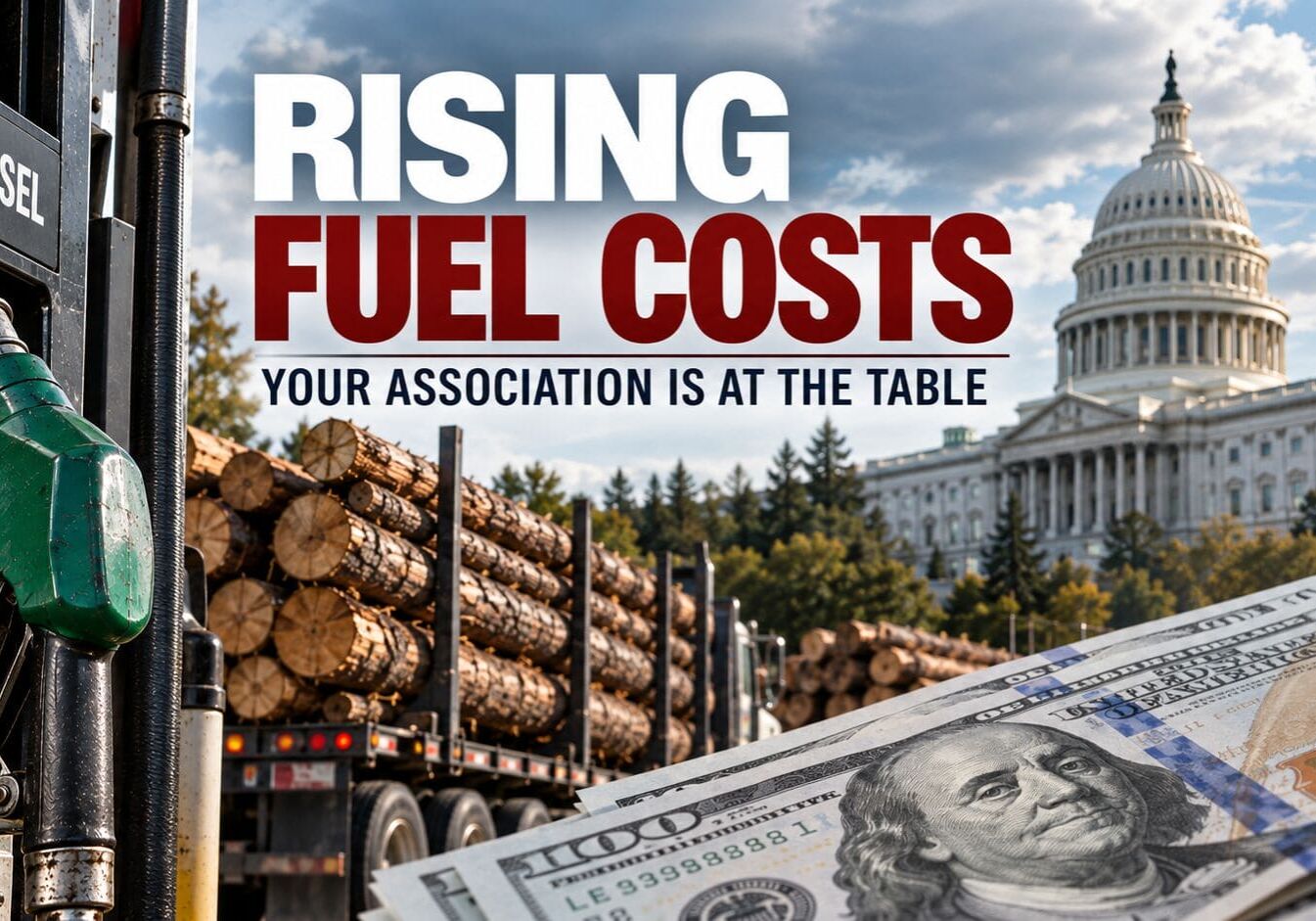
If you are running a logging operation or hauling wood anywhere in North Carolina right now, you already know what diesel is doing to your bottom line. You feel it every time you fill a truck, skidder, loader, or other piece of equipment.
The numbers confirm what you are experiencing. As of late September, the average price of diesel in North Carolina is approximately $6.21 per gallon. A year ago, it was about $3.46. The statewide average reached a record $6.247 per gallon on September 19.
Diesel is the lifeblood of our industry. It powers the equipment in the woods and the trucks that carry wood to the mills. When the price jumps by dollars instead of cents, those costs add up fast. Unlike many businesses, a logger cannot simply pass those increases along to the customer.
The Conversation Is Changing
Concerns raised by logging, trucking, agriculture, and other diesel-dependent industries are being heard.
In North Carolina, Congressman Don Davis has backed the Diesel Prices Relief Act, legislation that would temporarily suspend the federal diesel fuel tax, currently 24.4 cents per gallon, through January 1, 2027.
At the same time, lawmakers in Washington are discussing measures that would have seemed unlikely only a short time ago: temporarily restricting the export of American diesel to keep more supply at home. Legislation has been introduced that would restrict diesel exports when the national average remains above $5 per gallon. A separate proposal would temporarily prohibit exports through early 2027. The White House is also examining whether a full or partial restriction is feasible.
There is legitimate debate over whether export limits would ultimately lower prices. Some energy analysts and petroleum industry representatives warn that restrictions might unsettle refinery economics and global markets, potentially creating unintended consequences. What should not be lost, however, is that these conversations are happening now.
Logging associations, trucking organizations, farmers, forestry groups, and other rural industries have been telling policymakers what these prices are doing to the businesses that keep rural America moving. When enough voices deliver the same message, people listen.
That is why your membership matters. That is why our relationships with other forestry and logging associations matter. And that is why CLA continues to speak up.
Our Message Is Simple
North Carolina’s loggers cannot continue absorbing extraordinary increases in operating costs without relief somewhere in the system.
We are not asking one part of the forest-products industry to carry the entire burden. We are asking everyone who depends on a healthy logging sector (Washington, Raleigh, our mills and forest-products partners, and all of us working together) to recognize the reality and work toward solutions.
Fuel-cost adjustments, often called fuel surcharges, are one practical tool. These mechanisms can help share the burden of rapidly rising fuel costs rather than leaving the logging contractor or trucker to absorb the full increase. CLA is continuing those conversations with our mill partners. We are asking them to recognize the extraordinary circumstances our contractors face and to consider meaningful fuel-surcharge assistance and other operational changes that can help keep logging businesses viable.
The mills need loggers. Landowners need loggers. Forestry depends on loggers. Trucking depends on loggers. Rural communities across North Carolina depend on the jobs and economic activity this industry generates. And our loggers need those partners standing with them when times get tough.
As your Executive Director and your voice in this industry, I want you to know that I am working hard to make sure your message is heard.
Your message is clear: You want to work. You want to keep your crews employed, your trucks moving, and the mills supplied. But you can't keep absorbing costs that are rising faster than your businesses are able to recover.
This week I am in Western North Carolina, working alongside industry partners and leaders and carrying those concerns directly to the people who need to hear them.
No single solution will fix this overnight. Suspending the federal diesel tax is under discussion. Keeping more American diesel at home is under discussion. Fuel surcharges and assistance from our mill partners are under discussion. The fact that these conversations are occurring matters.
CLA alone did not create them. But CLA is part of a much larger voice (logging associations, forestry organizations, farmers, truckers, and rural businesses across the country) saying the same thing: Something must change.
We will continue talking with our mills. We will continue working with our industry partners. We will continue communicating with our elected leaders. And most importantly, we will continue listening to you.
Logging has never been an easy way to make a living. It takes grit, investment, risk, and extraordinary hard work. For generations, logging families across the Carolinas have built businesses, raised families, and passed their knowledge and traditions from one generation to the next.
Those traditions matter. Our work matters. Our families matter. Our faith matters. And the logging tradition we are fighting to preserve matters.
We have weathered difficult times before, and we will face this challenge the same way we have faced so many others: together, looking out for one another, speaking with one voice, and trusting in God to guide us forward.
Stay safe, keep the faith, and know that your Carolina Loggers Association is working for you.
Jonzi Guill
Executive Director
Carolina Loggers Association