
March 9, 2026
For log haulers and the wood products industry in North Carolina, the message is clear: diesel price pain is temporary, building toward better reliability, fairer pricing, and energy stability. Enduring this squeeze paves the way for future gains.
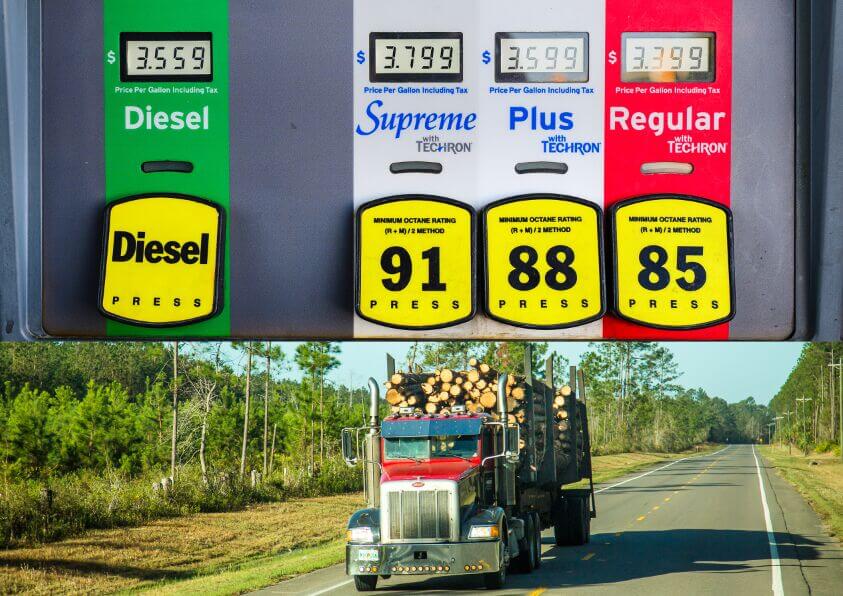
Right now, the pump is telling a different story. Diesel has jumped hard. The national average climbed to around $4.00 to $4.16 per gallon in early March 2026, with some reports showing spikes toward $4.60 in harder-hit areas. Wholesale prices surged over 30 percent in short bursts, and retail prices rose 14% to 22% in recent weeks. All of this was triggered by the Iran conflict choking the Strait of Hormuz, through which one-fifth of global oil flows. A brutal Northeast winter also burned extra heating oil, practically the same fuel, making supplies tighter as the crisis began. The entire logging operation feels every cent. Not just the trucks hauling timber over remote roads, but also the equipment in the woods: skidders, feller bunchers, timber harvesters, and loaders, all burning diesel as they work long hours in demanding terrain. Fuel already takes a huge slice of total operating costs, often rivaling equipment maintenance, parts, and crew pay. Thin margins mean there is almost no cushion left when prices rocket like this.
Smaller owner-operators and family log-trucking outfits are squeezed hardest. The logging crews running those diesel-powered machines in the woods feel it too. Larger carriers can tweak fuel surcharges weekly and spread the hit somewhat. Independent and smaller operations usually cannot. One trucker described the speed of this rise as the worst he has seen in years. It forces thoughts of rate increases just to keep the wheels turning. In the Pacific Northwest, Southeast heartlands, and our pine-heavy North Carolina forests, every extra dollar per gallon compounds the challenge. Higher diesel prices quickly erode what little profit remains. Costs ripple into construction lumber, pulp, paper, and other wood products that keep our local economy moving, all things we know who work in the industry.
The broader trucking world shares the strain. Diesels make up 20 to 25 percent of per-mile costs across fleets. Sudden wholesale leaps throw budgets into chaos. Smaller carriers are threatened with closure. Everyone is forced to rethink routes, idle trucks longer, or hunt for every possible efficiency. For full logging operations, math is especially unforgiving. More fuel is burned per job. There are fewer easy ways to offset the pain at the pump.
Energy Secretary Chris Wright keeps stressing the flip side. He calls this elevated-price period temporary. "It will not be long," he said in recent interviews, estimating weeks rather than months even in the worst case. The world sits on plenty of oil, especially in the Western Hemisphere. The U.S. now exports far more than it imports. Once the Iran situation eases and shipments resume normal flow, relief should follow. Wright ties the current disruption to a single chokepoint and resolves to reduce reliance on it. Stabilizing that flow means fewer wild price swings in the future and steadier diesel costs for planning hauls, bidding jobs, running equipment shifts, and keeping crews paid. Consistent, fair access to petroleum becomes the norm. Breaking free from repeated volatility is the bonus that comes with it.
That long view does not erase today's hurt, but it gives context. Log truck drivers, logging crews, and companies across the US, including here in North Carolina, are already adapting the way they always have. They watch pump prices hour by hour, tighten routes and equipment use, run the most efficient rigs and machines possible, and talk rates with mills when necessary. Smaller operations may face the toughest stretch. Some could teeter if the spike lasts for more than a few weeks. Still, officials' outlook points to resolution soon, not years of high prices.
References
American Transportation Research Institute. (2025). Operational costs of trucking: 2025 update. https://truckingresearch.org/research/operational-costs-of-trucking/
CNN Business. (2026, March 8). Soaring diesel prices and wider economic impact. https://www.cnn.com/2026/03/08/business/soaring-diesel-prices-wider-impact
FreightWaves. (2026). Rapid fuel price jump hits transportation hard. https://www.freightwaves.com/news/rapid-fuel-price-jump-hits-transportation-hard
Reuters. (2026, March 4). U.S. diesel hits $4 per gallon as fuel costs rise amid escalating Middle East conflict. https://www.reuters.com/business/energy/us-diesel-hits-4-per-gallon-fuel-costs-rise-amid-escalating-middle-east-conflict-2026-03-04
U.S. Energy Information Administration. (2025). The Strait of Hormuz is the world's most important oil transit chokepoint. https://www.eia.gov/todayinenergy/detail.php?id=65504
U.S. Energy Information Administration. (2026). Weekly retail gasoline and diesel prices. https://www.eia.gov/petroleum/gasdiesel/
CBS News. (2026, March 8). Energy Secretary Chris Wright says period of elevated energy prices will be temporary [Video transcript]. Face the Nation. https://www.cbsnews.com/news/chris-wright-energy-secretary-face-the-nation-transcript-03-08-2026/